2 The Return and Recovery of Stolen Assets
In 2024, the African Center for Governance advanced research, legal, and regulatory reforms through key publications and policy analysis. Notable publications included the compendium on Nigeria’s anti-corruption efforts (2015-2023), guidelines for CSOs on managing recovered assets, and a risk assessment report on AML/CFT vulnerabilities in the legal sector. By providing evidence-based insights and advocacy tools, the African Center strengthened transparency, accountability, and financial crime prevention across Nigeria and Africa.
2.0.1 Facilitation: Sensitization Workshop at the Nigerian Law School, Bwari
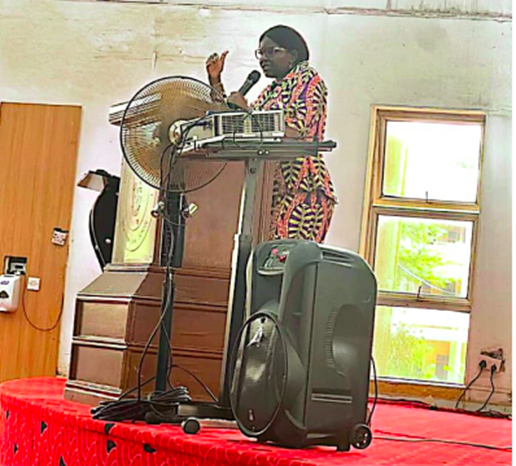
In August 2023, The African Center and the Digital Evidence and Cyber Forensic Institute (DECFI) embarked on a sensitization visit to the Nigerian Law School Bwari, Abuja on the 22nd of August 2023. The event was held in the students’ auditorium with about 400 law students in attendance. The organizations presented emerging issues of laws on Asset recovery and Digital forensics to the students.
During the presentations, we introduced the law students to the field of asset recovery. We also discussed the provisions of the United Nations Convention against Corruption (UNCAC), Proceeds of Crime Act 2022, UN SDGs, particularly Goal 16, and other relevant laws on asset recovery. We also informed the students about the various career opportunities available within the field of asset recovery. Finally, we introduced the aspirants to the Digital Evidence and Cyber Forensic Institute (DECFI) and the certification program.

2.0.2 Facilitation: Joint Webinar with the Nigerian Institute of Advanced Legal Studies
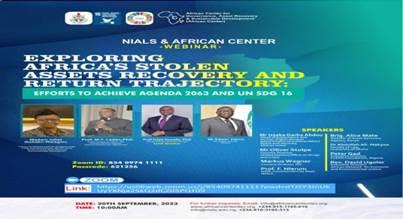
On the 20th September 2023, the African Center for Governance, Asset Recovery and Sustainable Development in collaboration with the Nigeria Institute of Advanced Legal Studies (NIALS) held a webinar on the theme “Exploring Africa’s Stolen Assets Recovery and Return Trajectory: Efforts to Achieve Agenda 2063 and UN SDG 16”. The webinar recorded about 90 participants which comprised law enforcement agencies, civil society organizations, asset recovery practitioners as well as academia.
The webinar highlighted the definition of asset recovery, the provisions of UNCAC, AUCCPC, UN Agenda 2063 and UN SDG 16 and the current position of certain African countries. It also gave an overview of the AU Agenda 2063 and Benchmarking Africa’s Stolen Assets Recovery Trajectory, tracking the progress made in line with the UN Convention against Corruption and UN SDG 16 in the use of recovered assets’ and a country-level analysis for Ghana, Nigeria, and Kenya.
2.0.3 Facilitation: South Africa Asset Forfeiture (AFU) Organizes a Webinar on International Asset Recovery
Novermber 2023 On the 15th-17th of November 2023, the African Center participated in the webinar organized by South Africa’s Asset Forfeiture Unit (AFU) Legal Indaba with the theme: “Accelerating Domestic, Cross Border & International Asset Recoveries” held at Pretoria, South Africa.
This program was organized as a follow-up to the FATF-INTERPOL Roundtable Engagement (FIRE) event on 12-13 September 2023. The event aimed to tackle the obstacles in the international cooperation process with a specific focus on financial investigation and mutual legal assistance in stolen asset recovery.
Nigeria’s perspective and an in-depth review of Nigeria’s asset recovery measures, as well as the international procedures required for cross-border, tracing, freezing, and confiscation of stolen assets including the procedure for negotiating and returning stolen assets and what South Africa could do to improve their capability in this field.

2.0.4 Panelist: World Bank/UNODC/StAR Panel Stolen Asset Recovery Initiative
December 2023
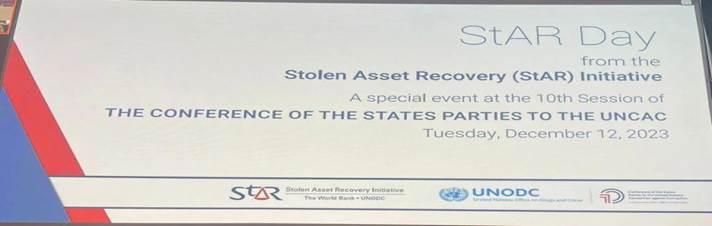
A Special Event – StAR Asset Recovery Day, organized in collaboration with the Stolen Asset Recovery Initiative (StAR) featured the African Center as one of its facilitators. The StAR Asset Recovery Day serves as a crucial platform for StAR, its partners, practitioners, and stakeholders to engage in substantive discussions covering a range of topics related to asset recovery. The event also provides an opportunity to outline the challenges faced in the area of asset recovery and set expectations for the future.
The session on Engaging Civil Society in Asset Recovery and Return aimed to explore the necessary elements for the realization of the Global Forum on Asset Recovery (GFAR) principles 4 and 10 on transparency and participation of civil society organizations. It highlighted the importance of Civil Society Organizations as part of the asset recovery process. The speakers noted that engaging Civil Society in Asset Recovery requires allowing them to participate in the negotiation and monitoring of returned assets; granting them locus to litigate asset recovery cases and CSOs can also provide information to law enforcement agencies to enable the tracing of stolen assets.
2.0.5 Interview: Executive Director, Juliet Ibekaku-Nwagwu by Global South Dialogue On Economic Crime
The African Centre’s Executive Director, Juliet Ibekaku-Nwagwu, shared her expertise in an exclusive interview with the Global South Dialogue on Economic Crime (GSDEC). Drawing from her extensive experience in financial intelligence and anti-corruption, she provided key insights into Nigeria’s efforts in combating financial crime, asset recovery, and asset management.
She highlighted strategic approaches that have shaped Nigeria’s anti-corruption framework and discussed an award-winning case study demonstrating the impact of data-driven methods in disrupting illicit financial flows and terrorism financing. The interview reinforced the importance of intelligence-led interventions, strong policies, and international collaboration in strengthening financial crime prevention.

2.0.6 Presentation: Paper at SOAS University of London
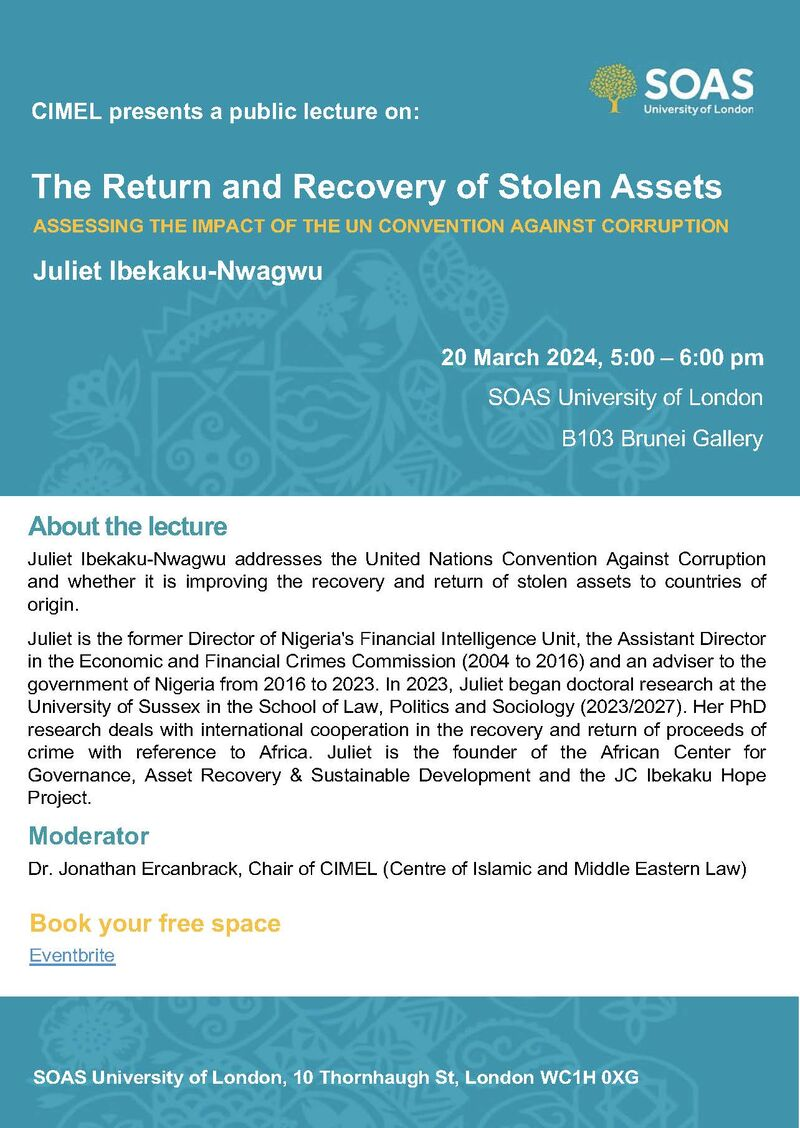
The African Center delivered a lecture on the topic, “The Return and Recovery of Stolen Assets: Assessing the Impact of the UN Convention against Corruption,” on 20 March 2024. The public lecture, organized and moderated by the Centre of Islamic and Middle Eastern Law (CIMEL), aimed to analyze the effective implementation of UNCAC in asset recovery and return.
2.0.7 Publication: Guidelines for Civil Society Organizations in The Management and Monitoring of Proceeds of Crime
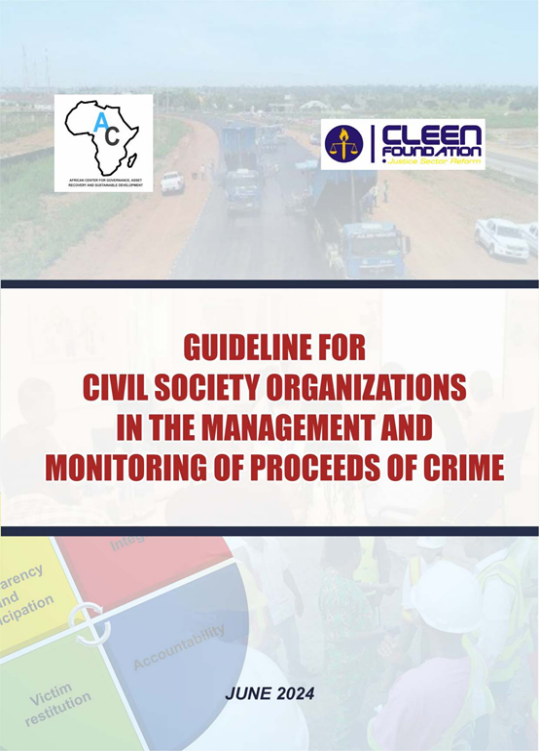
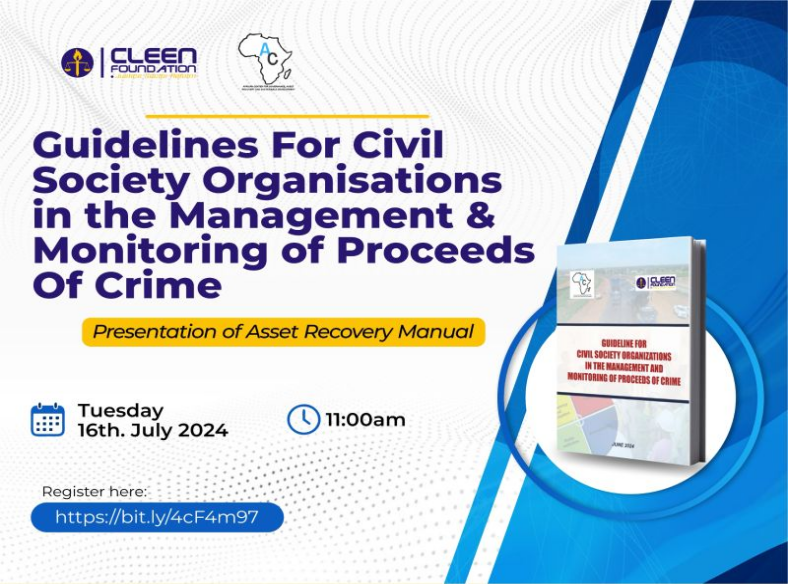
The Guidelines for Civil Society Organizations in the Management and Monitoring of Proceeds of Crime provide a framework for CSOs to effectively oversee and manage recovered assets. Drawing from CLEEN Foundation’s experience under the 2020 Trilateral Asset Return Agreement, the guidelines outline legal mandates, engagement strategies, and best practices for transparency and accountability. This initiative strengthens CSO participation in asset recovery efforts while advancing Sustainable Development Goals 16.4 and 16.5. https://africancenterdev.org/gcsommpc
2.0.8 Publication: Civil Society Protection and Participation In Anti-Corruption Efforts at The UNCAC Implementation Review Group
The African Centre’s written submission on civil society protection and participation in anti-corruption efforts was selected and published on the UNCAC Implementation Review Group’s First Resumed Fifteenth Session webpage. The position paper highlights the critical role of civil society in asset recovery and return, aligning with international and regional conventions, as well as Resolution 10/6, ‘Atlanta 2023.’ It underscores the importance of transparency, accountability, and international cooperation in the fight against corruption.
2.0.9 Training: Joint Workshop for Nigerian Investigative Journalists Workshop in Collaboration with the Royal United Services Institute
June 2024
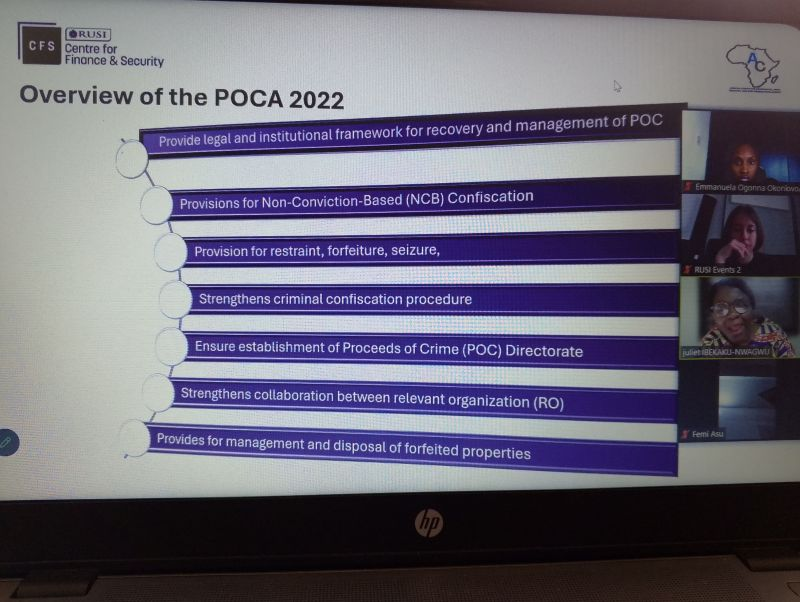
In collaboration with Maria Nizzero, we led the Royal United Services Institute (RUSI) Workshop II for Nigerian Investigative Journalists: Asset Recovery in Focus. Organized by the Centre for Finance and Security at RUSI, the workshop aimed to equip civil society organizations and investigative journalists with the skills and knowledge needed to tackle complex asset recovery and corruption cases.
The African Center provided insights on managing and monitoring proceeds of crime, highlighting legal frameworks, key challenges in asset recovery, and opportunities for improvement. The discussion also emphasized the critical role of civil society organizations in exposing corruption, monitoring asset recovery processes, and advocating for reforms.
2.0.10 Facilitation: Session on Tracking and Recovery of Proceeds of Crime ar Regional Conference on Administration of Criminal Justice
October 2024
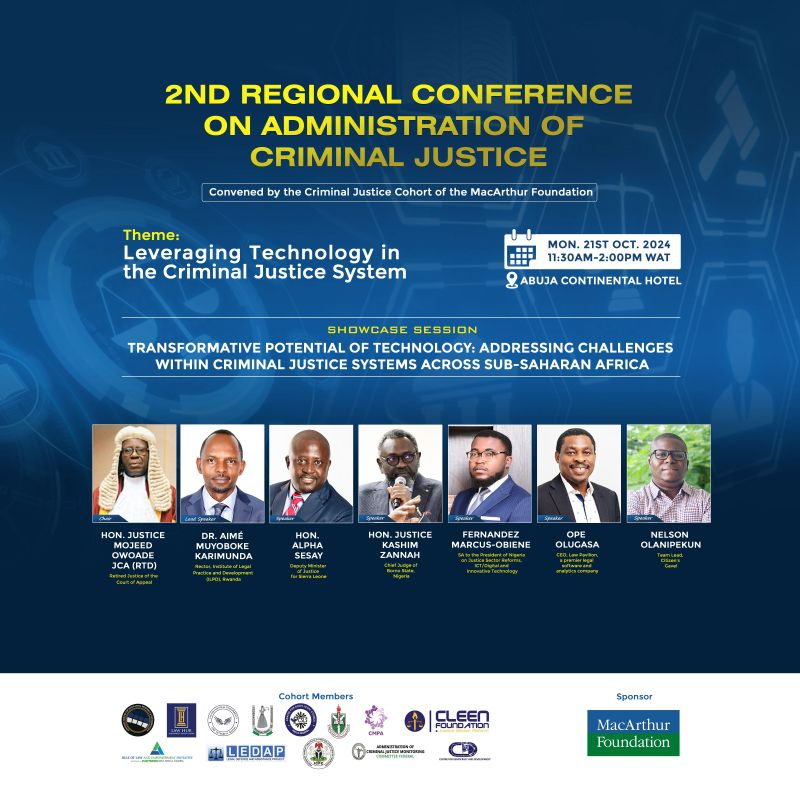
The African Center participated and facilitated a session on Tracking and Recovery Proceeds of Crime: The Role of Information Technology during the 2nd Regional Conference on Administration of Criminal Justice held on 21-23 October 2023.
The 3-day event was organized by the Juritrust Centre for Socio-Legal Research and Documentation (the Centre). The key objective of the conference titled ‘Leveraging Technology in the Criminal Justice System’ was to facilitate the exchange of knowledge and experience best practices on best practices in the Criminal Justice System.
The panel examined the asset recovery process and the role of the Financial Intelligence Unit in tracing stolen assets. The importance of information technology in asset recovery was highlighted to include enhanced monitoring, enhanced security measures, data integration, and analytics. Integrating IT in asset tracing, and recovery processes can improve asset management and recovery strategies, enable law enforcement to overcome challenges, and foster a more secure technological environment.